


Getting someone to place a first order is only the beginning. The harder business challenge is giving that customer a reason to return without relying on constant discounts. Food delivery app development can support this shift by connecting ordering convenience, personalised experiences, reliable service, and useful customer data in one digital journey.
A repeat customer usually does not return because of one feature. They return when the entire experience feels easy and dependable. The menu is simple to browse, checkout is quick, delivery information is clear, and the next order feels easier than the previous one.
Consequently, a well-planned app can become more than an ordering channel. It can become a direct relationship between a food brand and its customers.
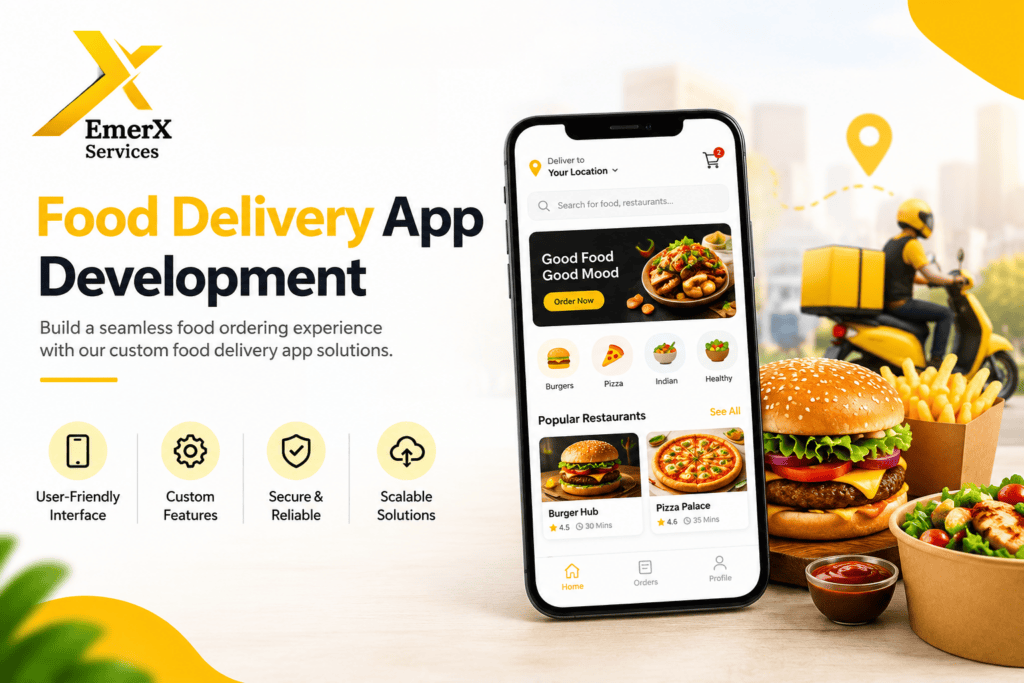
The First Order Sets the Standard
A customer’s first interaction creates an immediate impression of the business. Complicated navigation, slow screens, unclear delivery charges, or an inconvenient payment process can create hesitation before the food even arrives.
That is why food delivery app development needs to consider the complete ordering journey, not just checkout. A customer should be able to discover dishes, customise an order where applicable, select a payment method, confirm the address, and track progress without unnecessary steps.
Small details can have a measurable effect on confidence. Restaurant information, order status, estimated delivery details, and clear pricing reduce uncertainty. Furthermore, reviews and ratings can help customers make decisions when trying a restaurant for the first time.
Convenience Gives Customers a Reason to Return
Once a customer has completed an order successfully, convenience becomes an important retention factor. A well-designed app can make repeat ordering faster and more intuitive through features such as:
- Saved addresses: Customers can avoid entering delivery details every time they place an order.
- Previous orders: Users can quickly find meals they have enjoyed before and reorder them without browsing the full menu.
- Favourite items: Frequently ordered dishes can be saved for easy access during future purchases.
- Quick reordering: A simplified reorder process reduces the number of steps between choosing a meal and completing the purchase.
- Relevant recommendations: Customers can discover new dishes, seasonal options, or suitable restaurant suggestions based on their interests.
- Less decision-making: A familiar and streamlined ordering experience is particularly valuable during busy workdays or regular meal times.
- Balanced discovery: Convenience should not make the app feel repetitive. Introducing relevant new choices alongside familiar favourites can encourage customers to explore while keeping the experience simple.
Personalisation Makes the Next Order More Relevant
Customers have different tastes, budgets, ordering habits, and schedules. Treating every user in the same way can limit the value of customer data.
An app can use previous order behaviour to make relevant suggestions. For example, someone who frequently orders vegetarian meals could see suitable options more prominently. A customer who repeatedly orders breakfast items may benefit from timely recommendations during morning hours.
The objective is not to show as many recommendations as possible. It is to show useful choices at the right moment. Specifically, personalisation works best when it reduces search effort rather than distracting the customer.
This is where online food delivery app development can support a more responsive customer journey. Behavioural data can inform recommendations, promotions, categories, and communication while keeping the customer in control.
Communication Should Add Value, Not Noise
Push notifications can bring customers back, but excessive messages can have the opposite effect. A customer who receives irrelevant alerts may eventually disable notifications altogether.
Useful communication is usually specific and timely. An update about an active order is essential. A reminder based on a genuine ordering pattern may also be relevant. However, repeated generic promotions can make the brand feel intrusive.
A thoughtful communication strategy can include order updates, new menu announcements, relevant recommendations, and occasional offers. The timing should reflect the customer’s relationship with the platform rather than simply following a fixed promotional schedule.
For example, a customer who has not ordered for several weeks may respond differently from someone who orders every Friday. Understanding that difference allows businesses to communicate with greater relevance.
A Smooth Experience Should Work Behind the Scenes
Customers see the interface, but retention also depends on what happens behind it. Restaurant management, delivery coordination, menu updates, payments, feedback, and order processing need to work together.
For a multi-vendor platform, this becomes even more important. Vendors may need separate access to manage menus and orders, while delivery partners need tools for navigation and status updates. Administrators need visibility across restaurants, payments, feedback, and supply-related operations.
A food delivery app development company should therefore consider the full ecosystem rather than designing only the customer-facing application. A technically attractive interface cannot compensate for disconnected operational workflows.
Scalability also matters. A platform that works well with a small number of orders may face different demands as users, restaurants, deliveries, and transaction volumes increase. Planning for growth early can prevent performance and management problems later.
Loyalty Should Be Built Around Real Customer Behaviour
Understanding why customers return helps businesses create retention strategies based on actual preferences rather than assumptions.
Track Frequently Ordered Dishes
Identify popular meals and combinations to understand customer preferences and improve recommendations, menus, and promotional decisions.
Identify Peak Ordering Times
Analyse ordering patterns to anticipate demand, improve preparation, and maintain smoother service during high-volume periods.
Understand Abandoned Carts
Examine incomplete purchases to identify possible pricing, navigation, payment, or checkout issues that may prevent conversions.
Measure Repeat Purchase Intervals
Track how frequently customers reorder to understand buying cycles and create timely, relevant engagement opportunities.
Prioritise Features That Solve Problems
For startups, behavioural insights can guide app development for startups toward features that address genuine customer needs.
Turn Data Into Better Experiences
The purpose of analytics is not simply collecting information but using customer behaviour to make every future interaction more useful.
The Real Value Lies in the Complete Customer Journey
A successful first order provides an opportunity, but repeat business is earned through consistency. Customers need convenience when browsing, confidence when paying, visibility while waiting, and reliability when the order arrives.
After that, the next interaction should feel familiar without becoming repetitive. Personalised recommendations can shorten discovery. Previous orders can simplify reordering. Relevant communication can maintain engagement. Operational tools can help businesses deliver the consistency customers expect.
In other words, retention should be considered from the beginning of product planning. Adding loyalty features after launch may help, but a customer-centred experience is much stronger when built into the app’s structure from the start.
Turning Repeat Orders Into Sustainable Growth
EmerX approaches app development with the broader business journey in mind. We can help you shape a customised platform around customer ordering, vendor management, delivery workflows, payments, tracking, and future scalability rather than treating each function separately.
Our focus is on creating a practical food delivery app development solution that supports a smoother experience for customers while giving your team the tools to manage growing operations. You can build around your business model and refine the product as customer behaviour becomes clearer.
If you are planning a new platform or improving an existing one, we can help turn the idea into a market-ready product. Talk to our team to discuss your app requirements.
Final Thoughts
Turning first-time buyers into repeat customers requires more than attractive screens or promotional offers. Food delivery app development can help businesses make every stage of the experience easier, clearer, and more dependable.
A well-planned delivery platform can connect customer convenience with operational efficiency, relevant communication, personalisation, and actionable data. As a result, the first order becomes the starting point of a longer customer relationship rather than a one-time transaction.
The strongest retention strategy is ultimately simple: understand what customers value, remove unnecessary friction, deliver consistently, and make their next order worth returning for.